
The Dogs of Duke
Remote and hybrid schedules give dogs of all ages more love, care and companionship – and their humans priceless peace of mind

“Dogs are part of our family, so it was a huge benefit to be with her,” Cavis said.

Duke’s flexible work policy permits leaders of schools, departments and units to assess roles that allow for hybrid or remote arrangements, and a 2024 Working@Duke survey found that 45% of nearly 3,900 respondents worked remotely one to four days per week, while 33% were fully remote.
It’s possible there has been no greater beneficiary than The Dogs of Duke. They’ve earned more scritches and cuddles, more frequent lunchtime walks and the additional doting necessary for senior doggos and puppies who need a bit of extra care.
For Cavis, the ability to work from home has meant precious time with the pup she calls “the star of my life” who turned 6 this year and is now healthy on her anti-seizure medication. Pucci even has her own Instagram account (“She’s practically an influencer,” Cavis boasts.).
In honor of National Dog Day on Aug. 26, meet a handful of other Duke dogs.
Dijon and Pals (Aaron Cook)
Currently, Aaron Cook has two dogs living full time at his Chapel Hill home – Dijon and a foster named Rory, both Labrador-golden retriever mixes.
But Cook, a Scientific Program Leader in the Duke Human Vaccine Institute, estimates his family has cared for hundreds of dogs in the seven years they have volunteered for Eyes, Ears, Nose and Paws, a Hillsborough nonprofit that trains and places medical service dogs.

Cook, his wife and two daughters foster and help train dogs in the program by reinforcing their public access skills. Sometimes a dog will stay for a day, sometimes for months.
Dijon, now about 6 years old, has been the only permanent addition to the family – not quite up to snuff as a service dog but impeccable as a family pet after he was released from the program and adopted. Last year, a foster named Lorelai was selected as a breeder and had an extended stay until she delivered her puppies. Because she is a certified service dog, in North Carolina she is permitted into offices – including some of Duke’s.
After Lorelai's puppies left to begin their training — including now-1-year-old foster Rory — her co-workers at the Duke Human Vaccine Institute were eager to welcome her back from maternity leave.
Wearing her phone headset and seated at her desk, Lorelai posed as Cook snapped a photo.
“That was her first day back at the office,” Cook explained.
Cindy, Flossie, Cricket and Bruiser (Barrie Harper)
In the past few years, Barrie Harper’s sweet Cindy has slowed down. The German short-haired pointer who donned a Duke sweatshirt for a photo a couple years ago is now about 15 years old and her full days of visiting neighbors after escaping her 5-foot fence are behind her.
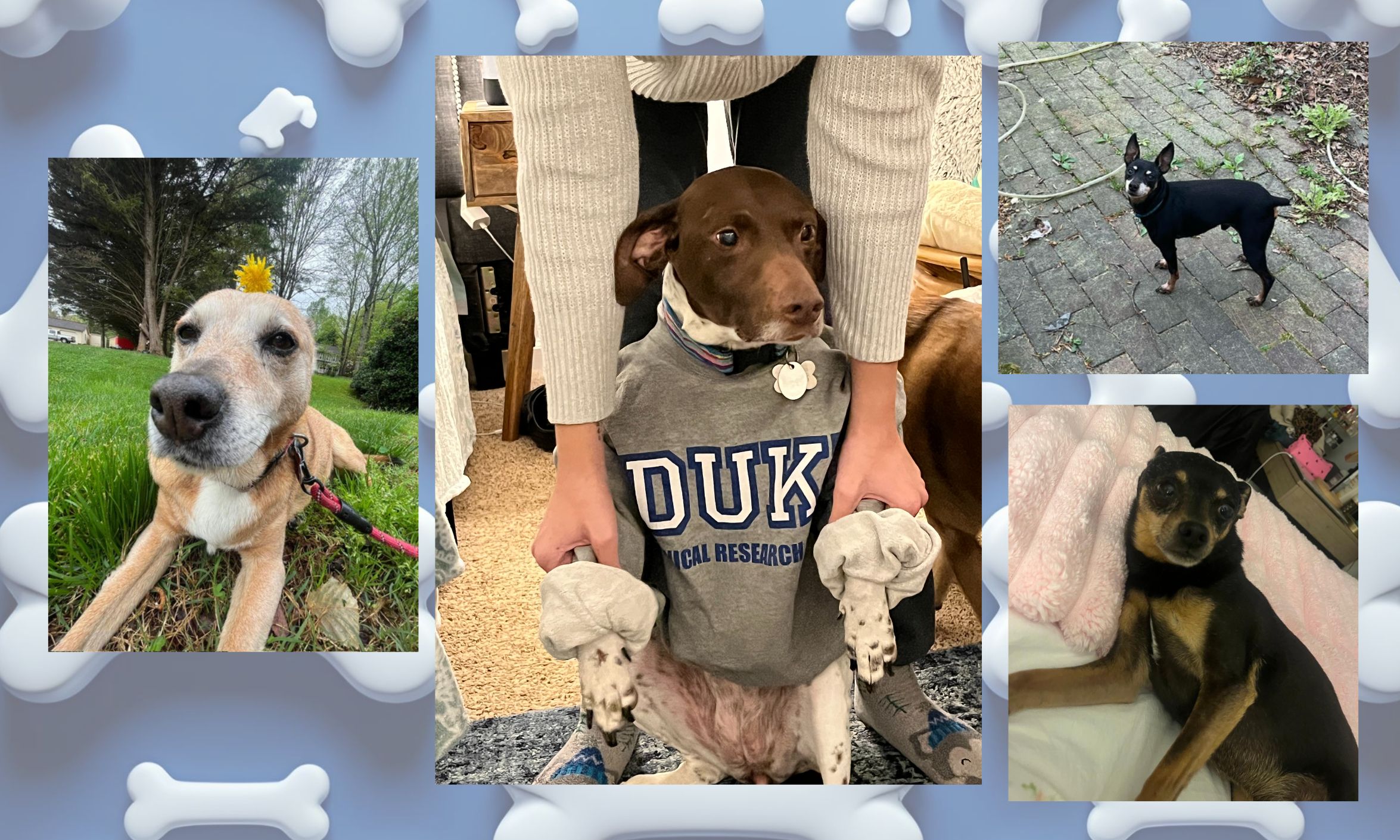
“She’s happiest eating, receiving under-the-neck scratches and soaking up all the cuddles we can give,” said Harper, a Clinical Trials Project Leader in Duke Clinical Research Institute.
When Harper works remotely, she walks Cindy several times a day, “which has been a gift,” she said, as Cindy's arthritis pushes Harper to savor every precious moment.
Harper also has 13-year-old Flossie, whom she calls her “bagel-brown pup.” “She’s the color, and some might argue, the shape of a toasted bagel,” Harper joked. Cricket, a miniature pinscher she dog-sits, and Bruiser, a neighbor’s chihuahua, round out the regulars in her home.
“I’m so grateful to work in a community that values camaraderie and connection – both in our work and our home lives,” Harper said.
Conrad and Kanga (Alejandro Trillo)
Alejandro Trillo’s two rescue pups, a pit bull named Conrad and a boxer mix named Kanga, arrived on the same day in September 2020.

“I only meant to adopt Conrad, but my wife fell in love with the puppy, so we brought them both home,” said Trillo, a Developer with Duke Health Technology Solutions.
Because Trillo’s wife is a teacher and his children are in school, he’s often home alone with both dogs when he works remotely.
“They’ve been great company and questionable colleagues – they never give me any help when I’ve got a programming challenge,” Trillo said.
“Although they do force me to get up from my desk and get some fresh air or engage in a game of fetch or tug, and sometimes that’s better than coding insight or advice.
“They are, of course, the BEST.”
Macaroni and Cheese (Crystal Parker)
Like many who work in Duke Alumni Engagement and Development, Crystal Parker has a hybrid work role. A Program Coordinator on the Alumni and Student Connections team, she works two days in the office and three days at home.
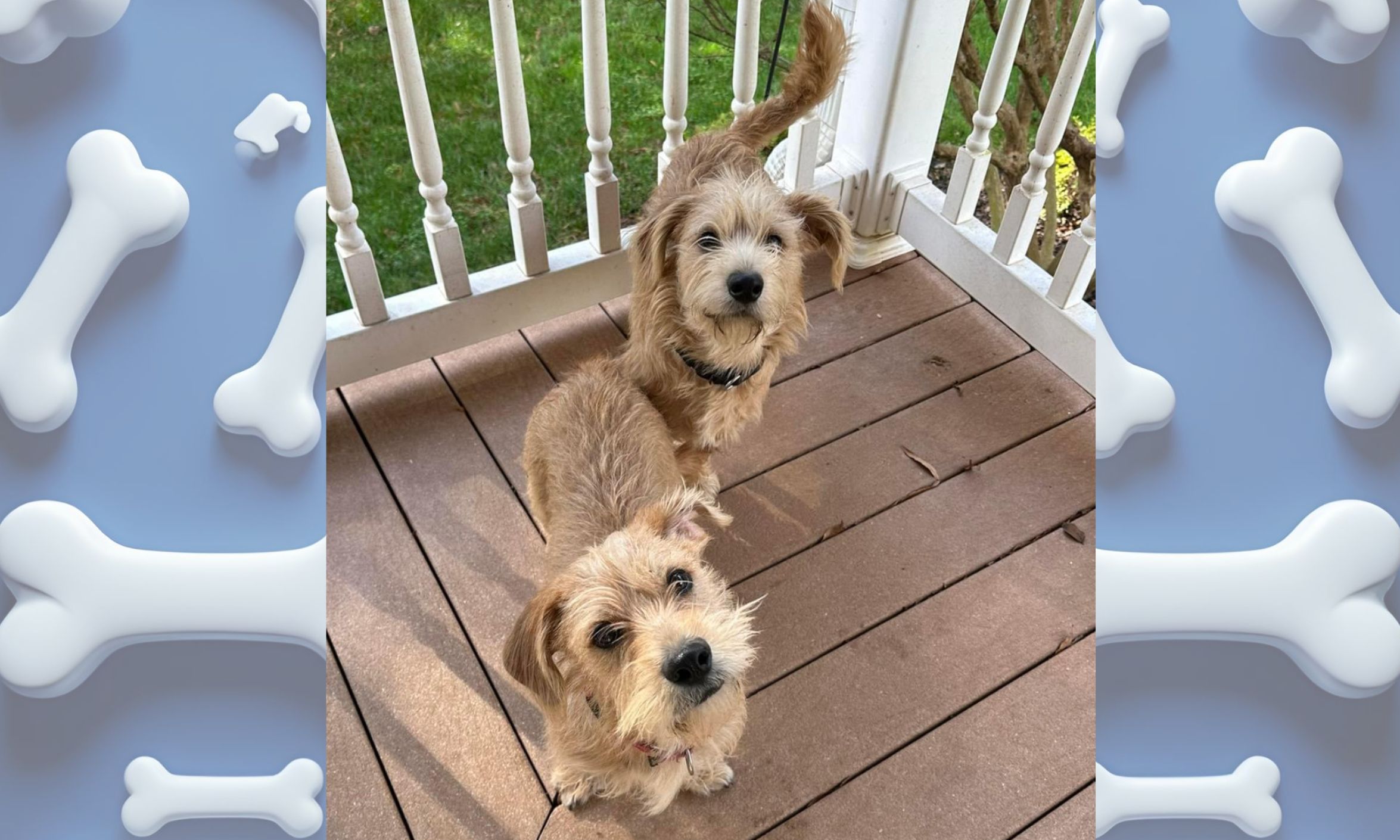
That schedule was a major factor in her family’s decision to adopt two rescue dogs in November 2024.
A bonded pair joined Parker, her husband and two children in their northwest Durham home and they received new names: Macaroni and Cheese.
Macaroni and Cheese – and Parker – have learned that several neighbors also work for Duke on a hybrid schedule, and they have enjoyed lunchtime and weekend walks with neighborhood pups.
“They’ve made fast friends both in and beyond the Duke community,” Parker said.
Joey and Ozzie (Krista Garcia)
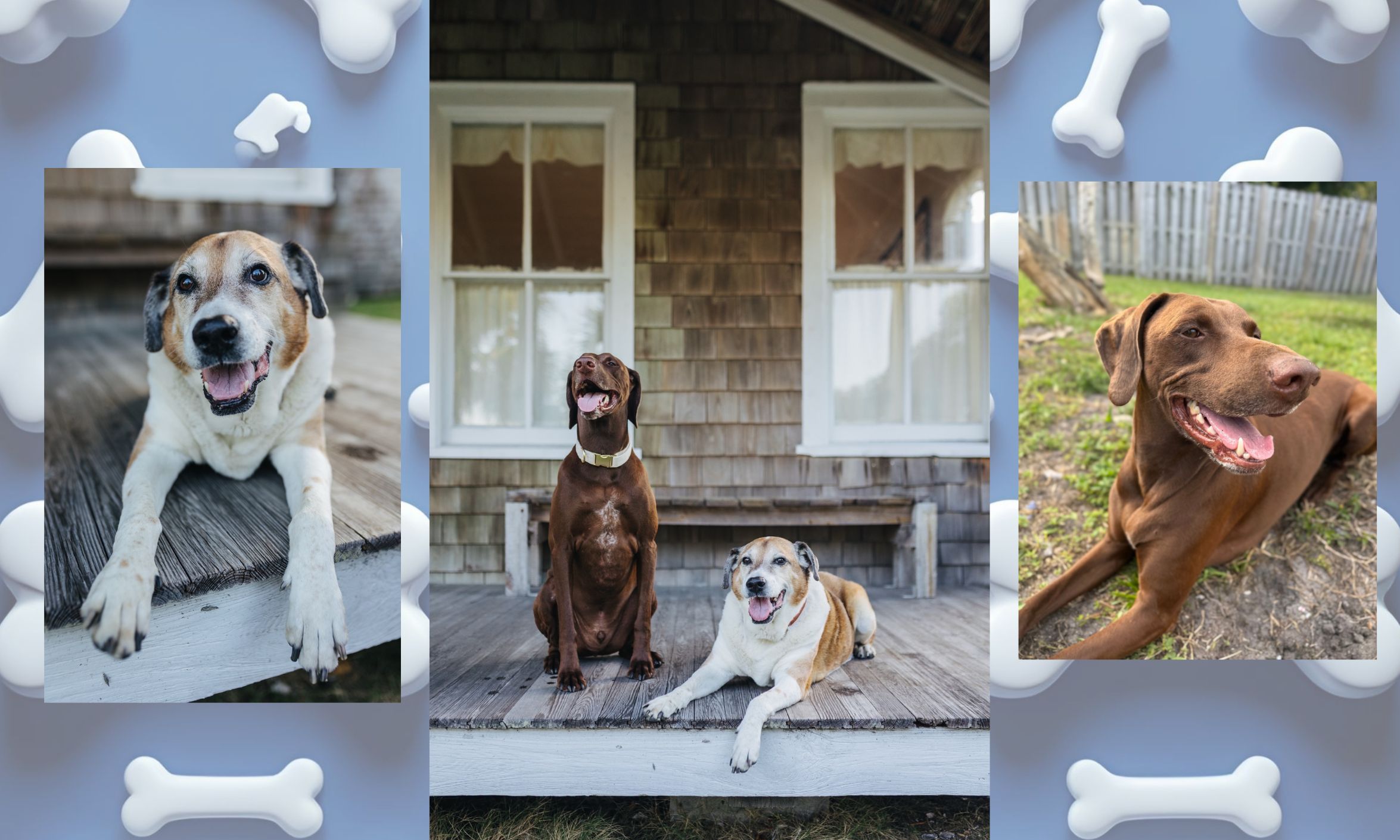
Krista Garcia says 17-year-old Joey and 4-year-old Ozzie are accustomed to having her work from home for her role as a Clinical Research Nurse Coordinator for the Duke Aging Center.
During the day, Joey and Ozzie lounge and watch her work.
But their favorite time is her lunch break when they can all go outside to spend time in the sun.
“Now that I no longer spend one to two hours a day commuting, I can spend that extra time to take the dogs to explore new local parks and hiking trails,” Garcia said.
Every moment is cherished as Joey battles cancer.
Working from home has also allowed Garcia to nurse him as he has recovered from various procedures.
“My furbabies and I are so grateful to Duke for allowing me to be home with them as I work remotely,” Garcia said.
Rooster (Lindsay Parker)
Lindsay Parker’s “pandemic pup” is one-of-a-kind: a breed called Tamaskan who arrived in the United States from Croatia when he was 10 weeks old.
“Think wolfy good looks, golden retriever heart,” Parker said.

When Rooster dashed out of his crate on Sept. 9, 2022, after his international journey and gave Parker immediate kisses, she experienced “instant heart-melt,” she said.
Parker, a Global Recruitment Officer for Duke Kunshan University, said Tamaskans are known for being “well-rounded,” and considers Rooster to be a model example as she works alongside him in her remote role.
“He’s incredibly chill and well-adjusted,” she said. “He’s never chewed anything that wasn’t his, makes friends on every walk and is so unfazed by my comings and goings that sometimes he doesn’t even lift his head when I get home.”
Rooster has, perhaps, just one fault: his fluffy, double-coated fur. Once, a Duke Office of Information Technology colleague found tufts of Rooster’s fur inside her laptop when it was disassembled.
“Impressive, right?” Parker said. “My home is basically a snow globe of dog fluff.”
Strukli and Sparky (Matt Lardie)
Matt Lardie credits the Duke University School of Nursing for a lot in his life. Lardie is a Communications Strategist for the school, and his husband, Harper Hornaday, graduated in 2024 with a nursing degree.
Last year, Lardie’s manager was gracious in allowing for a flexible work schedule as their Labrador, Samson, suffered from kidney disease and neared the end of life.
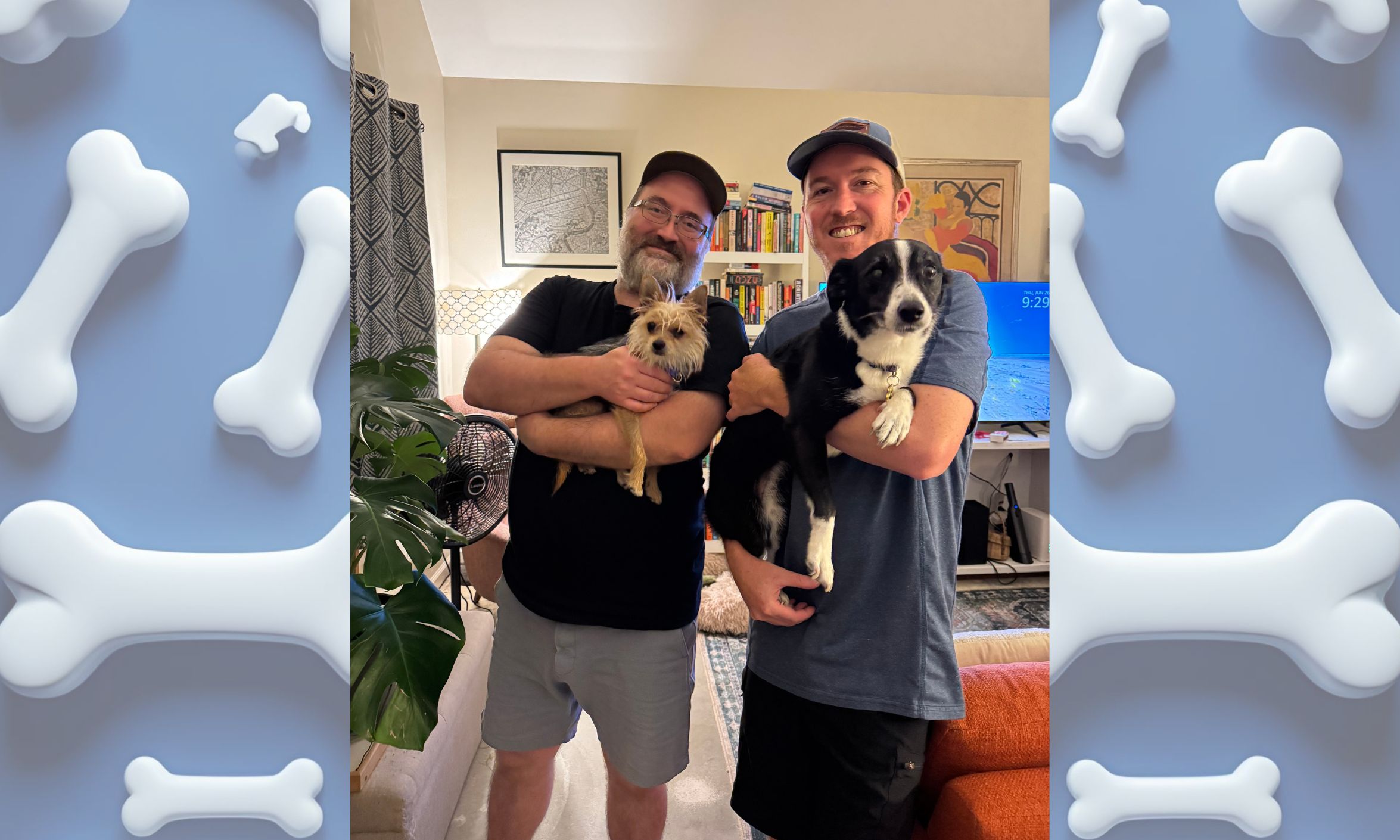
And months ago, by chance, a Ph.D. nursing student helped them find the latest addition to their family – a scruffy dog named Sparky. Sparky joins Strukli, who is a 6-year-old pup Lardie and Hornaday found and adopted in Bosnia.
“We always knew we wanted another dog, but almost all of our pets have just sort of found us – we sort of stumbled upon them,” Lardie said.
Which is what happened in June when they attended a Music Near the Gardens concert on Duke’s East Campus and saw a woman walking a scrappy pup with an “Adopt Me” vest.
It was love at first sight.
Sparky, four pounds, has mobility issues much like Samson, who was a tripod pup and Strukli, who has joint problems. Lardie’s flexible schedule allows him to work remotely on days when one or more furry friend needs extra care.
“We’re used to dogs with special needs and all the pieces just fell together,” Lardie said. “The fact that all three of us had the School of Nursing connection and the Duke connection kind of felt like the universe was pointing this dog in our direction.”
Sylvester (Theresa Johnson)
When Theresa Johnson’s daughter was sent home from college during the height of the COVID-19 pandemic, she asked for a puppy. Johnson and her husband told her no.
But Johnson’s daughter, Tariah, was persistent and in 2021 she simply brought home an adorable fuzzy puppy named Sylvester (which happens to be her father’s middle name).

“Don’t expect your daddy or I to do anything to take care of him,” Johnson told Tariah.
As Johnson worked remotely as a Project Manager in Duke PRMO with Operations Improvement she could hear Sylvester whining to go out while her daughter slept. Soon, Johnson’s proclamation was broken and Sylvester won over both her and her husband, Johnny.
“I knew my husband was all-in when he fenced in our entire backyard,” Johnson said.
When Tariah moved out, her parents feared the dog they initially didn’t want might leave with her.
Thankfully, Johnson said, Sylvester loves his home too much to go.
“I truly believe having Sylvester helped my entire family adjust to the new world forced on us by COVID,” Johnson said. “With Sylvester, I do not feel alone during the day and he encourages me to get up and move.”
Odin, Bohdi and Chica + 18 fosters (Karrie Comatas and Brian Ridder)
From June 2022 to September 2024, Karrie Comatas and her husband, Brian Ridder, fostered 18 beagles – some for just days, others for months. Hunter surrenders, fighting rescues and strays all found a home with Comatas, a Duke Lab Research Analyst and Ridder, a Duke Staff Specialist for Procurement and Supply Chain Management.

“It’s amazing to watch how they learn to ‘dog,’” Comatas said. “The joy of literally saving these dogs lives is immeasurable.”
But on Sept. 24, 2024, Comatas and Ridder adopted Chica, a foster who had stayed with them for eight months and was returned when she displayed aggression stemming from insecurity.
Chica joined Odin and Bohdi, two 50-pound coonhound-beagle mixes the couple adopted in 2020 from Triangle Beagle Rescue. Because Chica isn’t ready for more fosters added to her pack, Comatas and Ridder are taking a break from helping other pups for now.
In the meantime, Ridder works remotely and spends the most time with the threesome, while Comatas is happy to see how well everyone gets along when she comes home from the office.
“The brothers have a special connection, but I know Chica feels at home, too,” Comatas said.
Want to show off your dog? Send photographs through our story idea form.
Follow Working@Duke on X (Twitter), Facebook and Instagram and subscribe on YouTube.